Want to be in the loop?
subscribe to
our notification
Business News
PM MEETS CHIEF EXECUTIVE OF HONG KONG SPECIAL ADMINISTRATIVE REGION
The PM pointed out that as Viet Nam is accelerating its renewal and global integration and ASEAN and Hong Kong are completing negotiations on a bilateral free trade agreement (FTA), the potential for Viet Nam–Hong Kong ties remains promising.
He asked authorities, associations and businesses to facilitate exchanges while making it easier to expand joint work in the fields of culture, education, tourism and labour.
On the occasion of the meeting, he hailed the Hong Kong administration for lifting its travel warning against Viet Nam, and affirmed that the Vietnamese government was ready to offer all possible support to Hong Kong firms doing business in Vietnam, especially in services and industries that suit Vietnam’s sustainable development strategy.
The Vietnamese leader also asked for the Hong Kong side to encourage imports of produce, seafood, rice, dairy and fruits, to facilitate Viet Nam’s trade and investment in Hong Kong and to increase the frequency of flights between Hong Kong and Viet Nam.
Leung, for his part, asserted that Hong Kong placed importance on stepping up win-win cooperation with Viet Nam as part of efforts to deepen the comprehensive strategic cooperative partnership between China and Vietnam.
He said he was willing to serve as a bridge to help Vietnamese firms and localities access markets and global funding.
Expressing thanks to the Vietnamese government for actively backing the FTA between Hong Kong and ASEAN, he said he believed that the deal would open up a new period of mutually beneficial cooperation between Hong Kong and ASEAN, and between Hong Kong and Vietnam in particular.
Hong Kong is currently Vietnam’s ninth-largest trade partner and its sixth-largest supplier of foreign direct investment, which has topped US$16.6 billion. Viet Nam is Hong Kong’s third-largest trade partner in ASEAN.
Earlier the same day, PM Nguyen Xuan Phuc also met Chief Secretary for Administration of the Hong Kong Special Administrative Region Lam Cheng Yuet-ngor who briefed him on recent economic, trade, investment and tourism cooperation between the two sides.
She noted that the number of Hong Kong tourists to Viet Nam so far this year had surged by 130% a year ago, while two-way trade had seen rapid growth, with 35% of Hong Kong’s total imported rice shipped from Vietnam.
Right after her visit to Viet Nam in August, the Hong Kong administration rolled out a number of measures to expand its partnership with Viet Nam, including the removal of a warning against travel to Viet Nam and an agreement to launch Vietjet Air’s air route from Ho Chi Minh City to Hong Kong, the Hong Kong Chief Secretary said.
She also revealed that the Hong Kong Tourism Board also planned to increase tours by sea from Hong Kong to Ho Chi Minh City, Nha Trang, Da Nang and Hai Phong in the time ahead.
The Vietnamese Government leader lauded the positive measures that Hong Kong has taken as well as the contributions of Lam Cheng Yuet-ngor to bilateral ties.
He affirmed that Viet Nam was willing to work for a stronger affiliation with Hong Kong in economics, trade and tourism.
He proposed that the management agencies of both sides strengthen exchanges to remove obstacles in visa issuance procedures, creating favourable conditions for a bilateral partnership on tourism, education and labour.
He also suggested that both sides consider signing a rice trade deal to ensure the stable and long-term supply of the staple to Hong Kong.
Later that day, PM Nguyen Xuan Phuc and the Vietnamese delegation left Hong Kong, successfully concluding their official visit to China to attend the 13th China–ASEAN Expo and Business and Investment Summit, as well as their visit to Hong Kong.
On his way back, the leader sent a message to Chinese Premier Li Keqiang to thank him for China’s warm welcome. He also expressed his belief that the visit would help to further the Viet Nam–China comprehensive strategic cooperative partnership.
Source: VGP
Related News
BANKING / FINANCE / INSURANCE / TAX
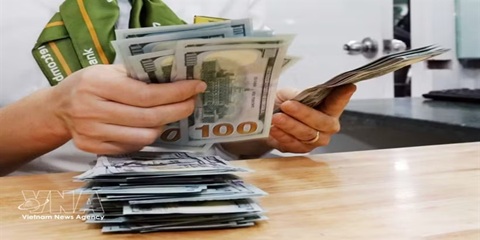
REMITTANCES TO HCM CITY RISE NEARLY 40% IN Q3
Remittances to HCM City reached more than US$2.83 billion in the third quarter of this year, up 39.5 per cent from the previous quarter and 3.6 per cent year-on-year. This was the first quarter showing positive annual growth this year, helping narrow the decline in remittance inflows over the first nine months. According to the State Bank of Vietnam (SBV)’s Regional Branch 2, remittances transferred to HCM City through credit institutions and economic organisations totalled $2.835 billion in Q3, an increase of more than $802 million from the previous quarter.
TECHNOLOGY
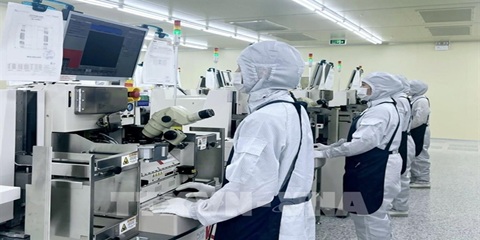
TECH SECTOR GROWTH OPENS UP OPPORTUNITIES FOR VIỆT NAM TO GO GLOBAL
The growth of the electronics, semiconductor and high-tech sectors worldwide is opening up a variety of opportunities for Vietnamese enterprises to integrate more deeply into the global supply chain. However, to become suppliers for these corporations, domestic enterprises must meet rigorous standards regarding quality, technology, productivity and order fulfilment capabilities.
VIETNAM ECONOMY INVESTMENT
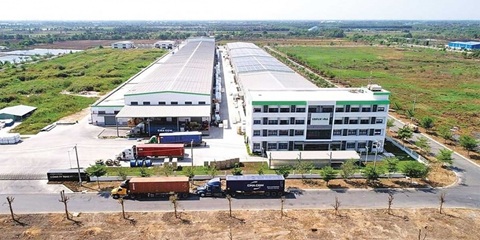
FOREIGN INVESTORS SEEKING A SYNCHRONISED MANUFACTURING ECOSYSTEM
Instead of focusing only on land costs and incentives as usual, foreign investors are seeking a synchronised manufacturing ecosystem, from stable power supply and logistics to shared infrastructure and the convenience of completing residence procedures for experts to serve their long-term investment in the country.
MEMBER CORNER / PROMOTIONS
SENTRYSAFE FHW40200 – PROTECT YOUR VALUABLES, ENJOY PEACE OF MIND!
Looking for a reliable solution to protect your important documents, cash, and valuables from fire and water damage? Genuine SENTRYSAFE - Reliable protection for your valuables and peace of mind! Contact Sen Wai Vietnam for more information and personalized product recommendations.
PROPERTY / INDUSTRIAL ZONE
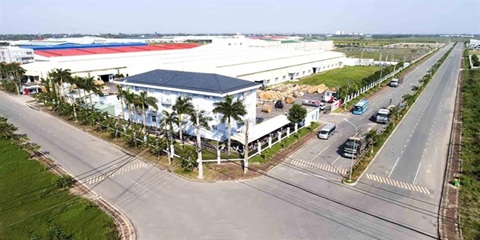
HCM CITY ATTRACTS US$5.7 BILLION INTO EXPORT PROCESSING AND INDUSTRIAL ZONES
HCM City attracted US$5.7 billion in domestic and foreign investment into its export processing and industrial zones during the first nine months of 2026. The figure exceeded the city's full-year target by 31 per cent, highlighting strong momentum in high-quality industrial investment under Resolution No.10-NQ/TW. Total investment reached 131 per cent of the 2026 target of $4.25 billion and represented a 29 per cent increase compared with the same period in 2025, according to the city's Export Processing and Industrial Zones Authority (HEPZA).
INFRASTRUCTURE / CONSTRUCTION / LOGISTIC / PORT
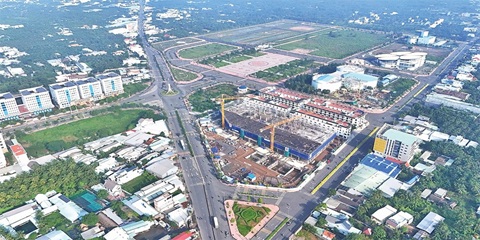
DONG THAP PROVINCE STEPS UP INDUSTRIAL EXPANSION AND INFRASTRUCTURE CONNECTIVITY
Accelerating public investment, strengthening inter-regional connectivity, and expanding industrial land are helping Dong Thap efficiently bolster competitiveness and drive economic growth. Following the 2025 merger of the former Dong Thap and Tien Giang provinces, the expanded Dong Thap province in the Mekong Delta faces mounting pressure to accelerate infrastructure development and strengthen connectivity among local economic zones, urban areas, industrial parks (IPs), and production centres.
Events Sponsors






















